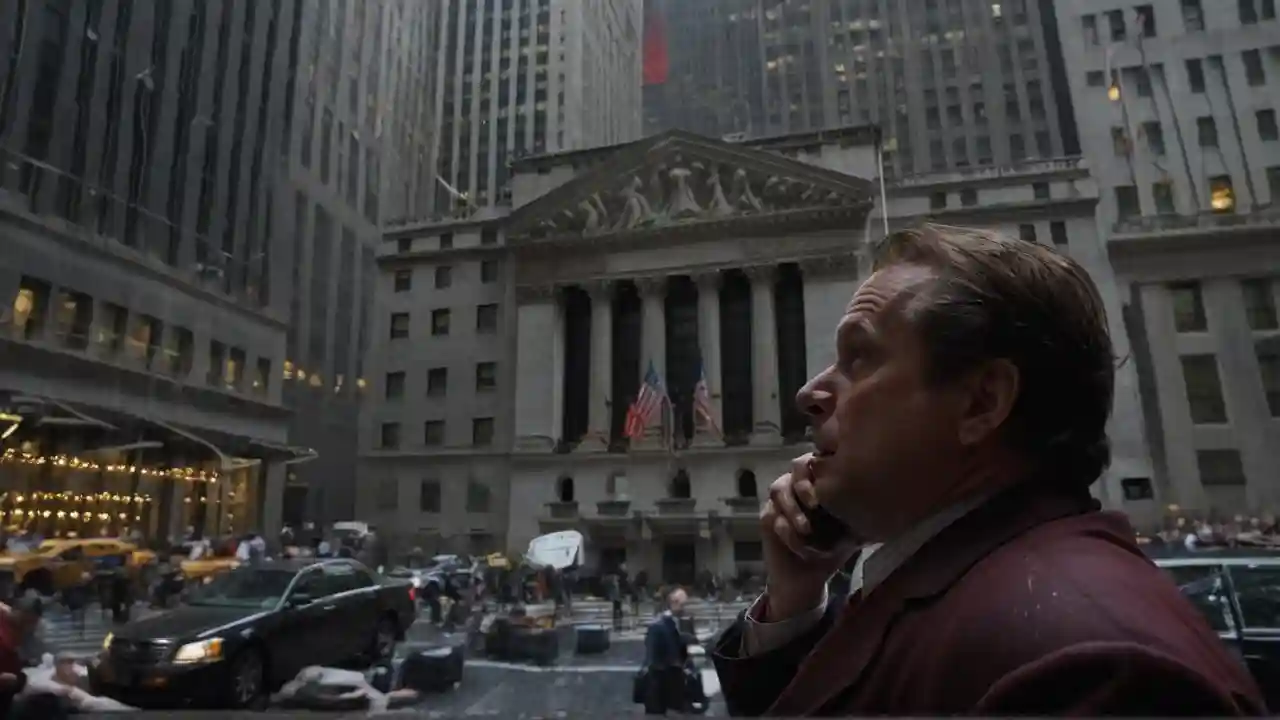
Wall Street Just Lost $1.5 Trillion in One Day—Here's What Went Wrong
Wall Street Just Lost $1.5 Trillion in One Day—Here's What Went Wrong
Thursday's market meltdown exposed a truth nobody wanted to face: the AI boom might be running on fumes
Morning felt like champagne and confetti. Nvidia crushed earnings. Walmart raised guidance for the second time this year. The S&P 500 rocketed up 1.9% in early trading, and traders were practically dancing at their desks.
Then the floor dropped out.
By closing bell, that celebration had turned into a bloodbath. The S&P tumbled 1.55%. The Nasdaq got hammered even worse, plunging 2.15%. About $1.5 trillion in market value simply vanished into thin air.
Nobody dropped a nuclear bomb. No CEO got arrested. What happened was subtler and somehow more unnerving.
Nvidia's the perfect example. The chip giant beat revenue estimates by over 60% year-over-year. Sounds amazing, right? But here's the catch: their accounts receivable kept climbing. Translation? They're shipping chips faster than customers can pay for them.
Kimberly Forrest from Bokeh Capital nailed the concern: "If things are flying off the shelves, then why aren't you getting paid for it?" That question now haunts every AI infrastructure investment on Wall Street.
The panic spread quickly. Bitcoin crashed below $87,000. The VIX—Wall Street's favorite fear gauge—spiked above 25. Tech stocks got absolutely demolished. Microsoft, Alphabet, Amazon, and Tesla each dropped between 1% and 3%. Oracle? Down 6% after disappointing cloud guidance sent investors running.
Only Walmart surged 6%, which tells you everything about where money's hiding now. Traders are diving into consumer staples like it's 2008 all over again. KobeissiLetter summed it up perfectly: sentiment's "fragile and nobody's convinced the AI spending makes sense."
The Data Vacuum That Spooked Everyone
Here's what actually triggered the chaos. Remember that government shutdown mess? It delayed the September jobs report, which finally dropped Thursday morning. The economy added 119,000 jobs—way better than the 50,000 forecast.
Normally that'd be great news. But it killed hopes for a December rate cut from the Federal Reserve. Odds now sit around 40%. Worse yet, the Bureau of Labor Statistics postponed October and November jobs data until December 16. That's six days after the Fed's December 10 meeting.
Fed Chair Powell recently described this as "driving in the fog." He wasn't joking.
Markets absolutely hate making decisions without complete information. This data blackout creates what professionals call information asymmetry. Investors and the Fed must now operate partially blind, which justifies demanding higher returns for taking equity risk.
Meanwhile, valuations look stretched. The S&P 500 trades at 22 times forward earnings versus a 10-year average of 18 times. Technology stocks? Even pricier at roughly 29 times earnings.
Major banks keep raising targets anyway. Barclays bumped their 2026 forecast to 7,400. Morgan Stanley went to 7,800. Both assume AI productivity gains will justify these elevated multiples. Thursday's sell-off tested those assumptions with real money, and they didn't hold up so well.
When Everyone Owns the Same Thing
This isn't the dot-com bubble redux. Nvidia actually generates tens of billions in free cash flow, not just vaporware promises. But positioning's gotten dangerous.
Think about it this way. The "Magnificent 7" technology stocks now represent roughly 30% of the entire S&P 500's market cap. When everyone crowds into the same trade, small cracks become earthquakes.
Thursday's intraday swing from up 1.9% to down 1.5% reveals mechanical forces at work. Crowded mega-cap exposure unwinds fast. Short-dated options get crushed. Volatility-targeting strategies automatically de-risk when the VIX jumps.
Here's the tricky part. When Nvidia initially rallies then fades, option dealers shift from long to short gamma. They must hedge differently, which mechanically amplifies reversals. These flow-driven dynamics explain why magnitude exceeded any actual macro revelation.
Call it a "credible bubble" if you want. The underlying technology proves real. The positioning and extrapolation? They've run miles ahead of fundamentals.
Smart Money Adjusts, Doesn't Panic
Don't mistake this for a simple "sell everything tech" or "buy every dip" situation. The structural AI productivity cycle remains intact. Consensus 2025 S&P earnings sit around 270-275, up double digits year-over-year. That's genuine growth.
But cyclical headwinds are mounting. Rich valuations collide with a data-dependent Fed operating with poor data. Policy uncertainty adds fuel to the fire. Expect higher volatility and range-bound conditions with significant sector rotations.
The winning approach? Reduce pure index beta while tilting toward quality within technology. Focus on companies with high free cash flow margins, net cash positions, and real pricing power in AI infrastructure. Pair this with defensive exposure in staples showing solid execution, like Walmart attracting higher-income households trading down.
This marks a shift from lazy beta to actual stock-picking. Stay long picks and shovels with real FCF. Be ruthless on AI tourists riding narratives instead of fundamentals. Distinguish Nvidia-caliber companies from leveraged stories depending on cheap capital.
The concentration risk and 22 times forward multiple suggest preparing for 10% to 15% drawdowns while maintaining conviction in multi-year AI compounding. Extremism's the real mistake here.
Today signals right-sizing AI exposure and upgrading portfolio quality, not abandoning technological transformation entirely. With elevated volatility, index collars protecting year-to-date gains make tactical sense. Monitor credit spreads on heavily-levered AI capex stories—they're your early warning system.
The market's testing whether today's massive infrastructure investments generate actual returns, not just top-line revenue. That's maturation, not crisis. But it demands more rigorous capital allocation than 2024's indiscriminate AI enthusiasm allowed.
NOT INVESTMENT ADVICE